
Made for the ranges
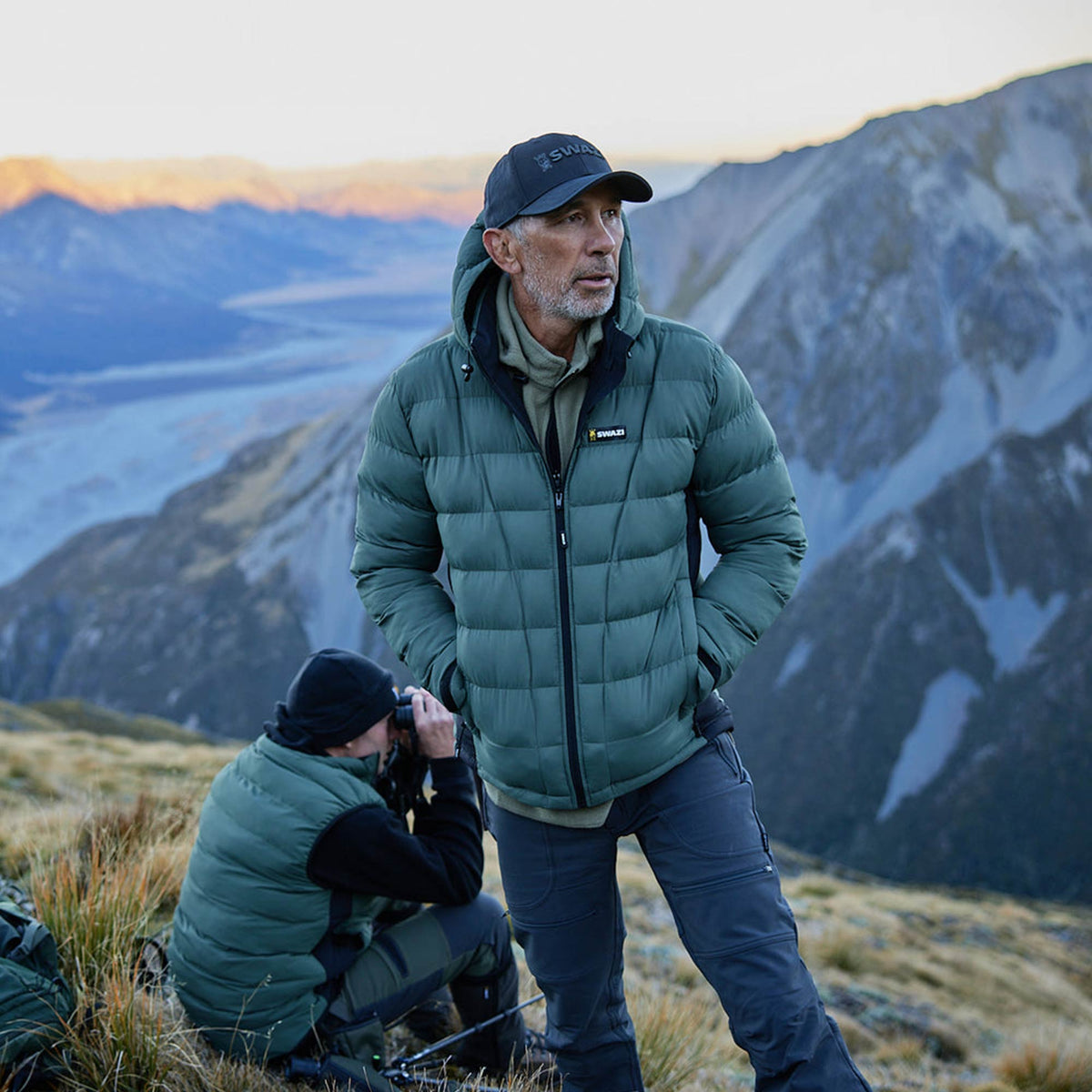
As Kiwi stories go, this one’s hard to beat. Out the back door of Levin, the Tararuas. Steep, wet and cold, and home to some of New Zealand’s best and most rugged hunting country.
Spend enough days in there and you learn what your gear is really made of. Back in the early ’90s, the answer was not much. Hunting gear came from outdoor and ski shops. It either looked the part and fell apart, or cost more than most hunters and farmers could justify. When one Levin hunter got bluffed out and stuck by a stream for two days, soaked through in his ski-shop gear, he decided enough was enough.
Out of pure necessity, Swazi started building gear that hunters and farmers could rely on. When new technical fabrics turned up, we cut them to suit the way hunters actually hunt, and took them straight into the hills. Up steep faces, through wet bush and supplejack, out in the frost before first light. Whatever ripped, leaked or let the cold in got fixed and went straight back out. That was the testing programme. No lab, no test rig. Just the Tararuas and a lot of rain.
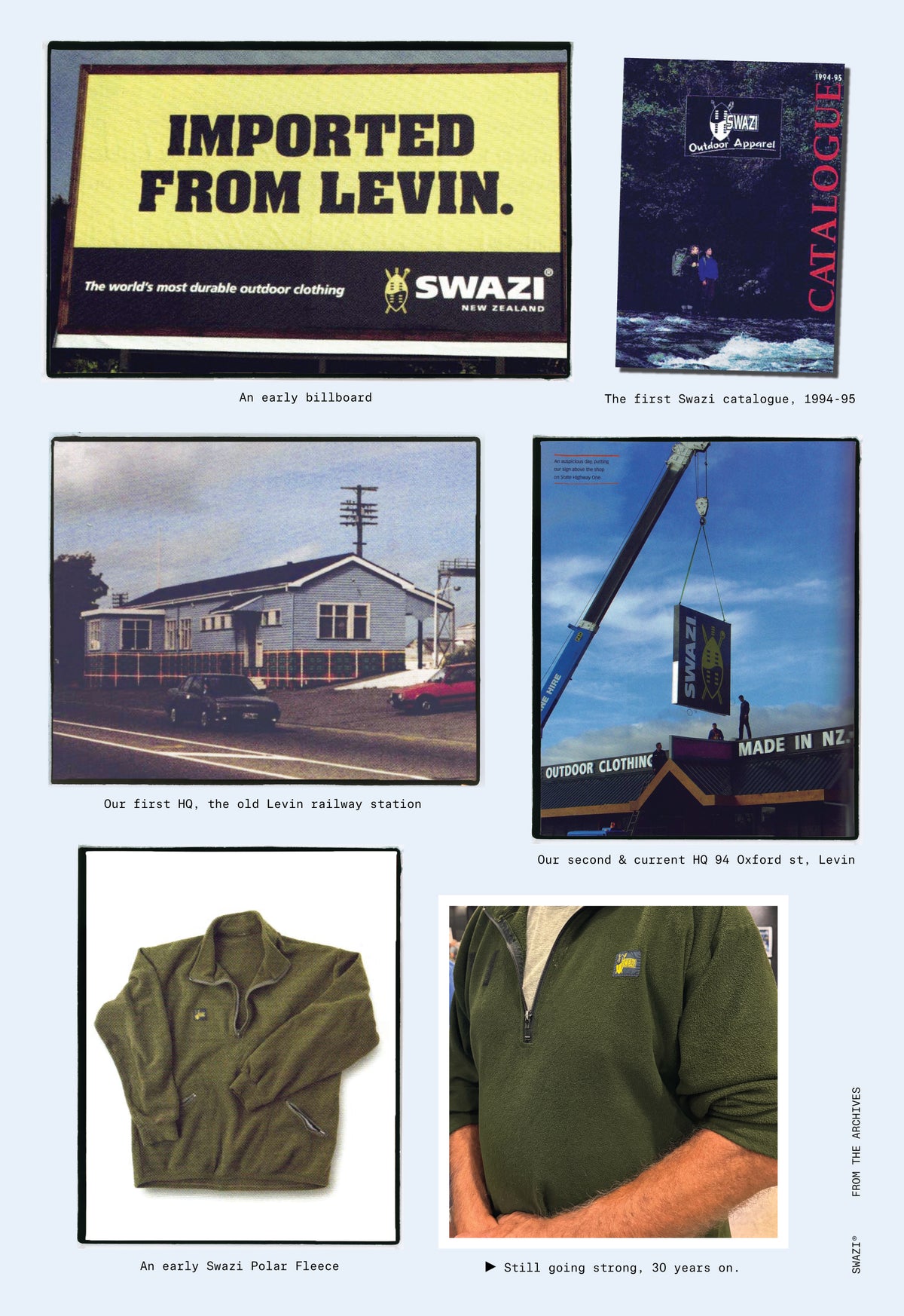
Swazi’s first proper HQ was the old Levin railway station. You couldn’t miss it once we’d given it a tartan paint job.
Word got around. Local hunters caught on and started buying Swazi gear for their own trips. If it worked for Levin, it might work further afield. So 60 jackets and pairs of pants went across the Tasman to a hunting show in Melbourne. No flash stand. Just a trestle table, a sheet borrowed off the hotel bed, and a homemade Swazi New Zealand sign. The trade had a look and kept walking. Then the public came through on the Saturday, and within a few hours the table was bare.
Not bad for a small-town outfit from Levin. In 1994 Swazi officially launched as an outdoor brand and moved into its Oxford Street home in Levin, where it still is today. We’ve been punching above our weight ever since.
We’ve tested it the same way since 1994. Bigger shed. Same hills.
STRAIGHT FROM THE CLAN
Made for the hunt
Don’t just take our word for it. Here’s what the Swazi Clan says after a season or twenty in the hills.
I’ve trusted Swazi gear in some of the most remote and unforgiving places on Earth.
— Baz · Hunter and guide, Swazi ambassador.
Still an amazing jacket to this day.
— Kevin Hennessy · on his original Tahr jacket, bought nearly 20 years ago.
The Victorian High Country can be a brutal place on gear… That’s why I love Swazi. It’s gear designed by Kiwis who live in a country that’s very similar to what we deal with here.
— Jared Matthews · Victorian High Country, Australia
Good gear doesn’t make you a better hunter, but it does let you focus on the hunt instead of fighting the conditions.
— Shaquille Graham, Central North Island
RAIN, SHINE OR SIDEWAYS HAIL
Rained all day. Still dry.
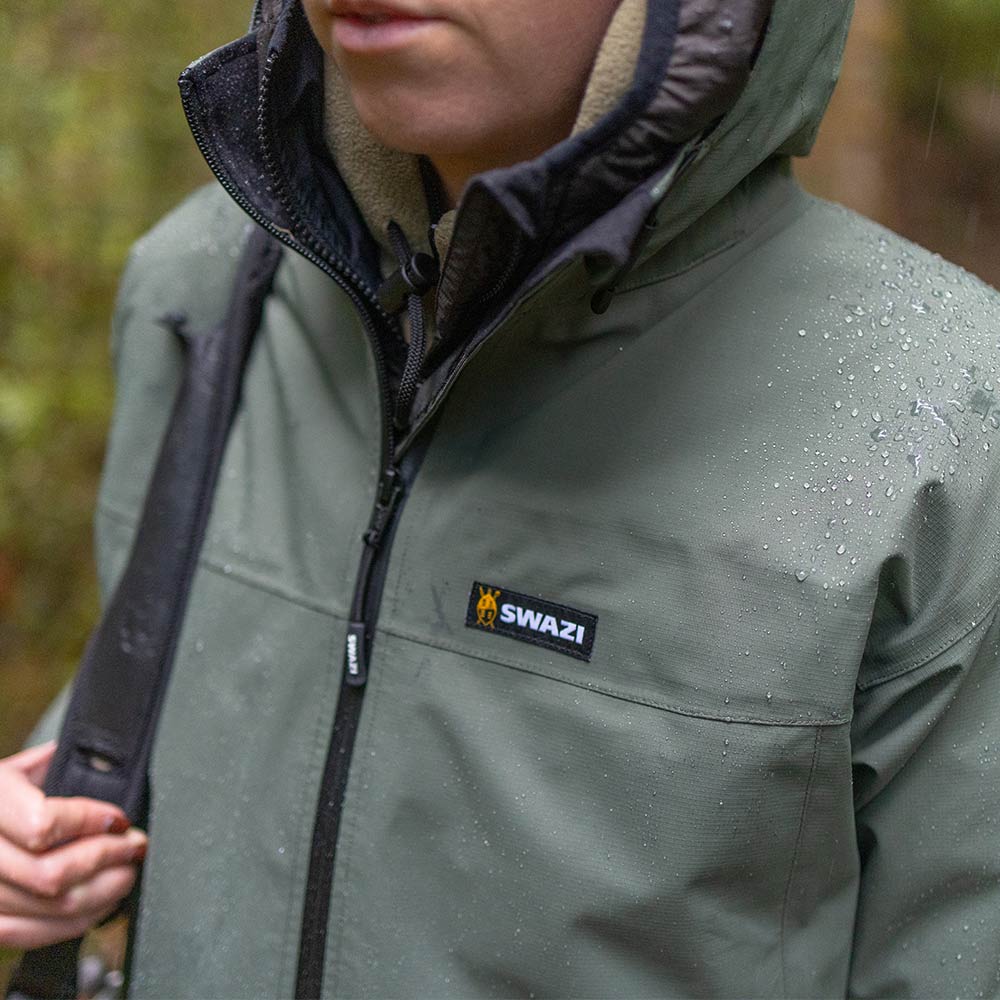
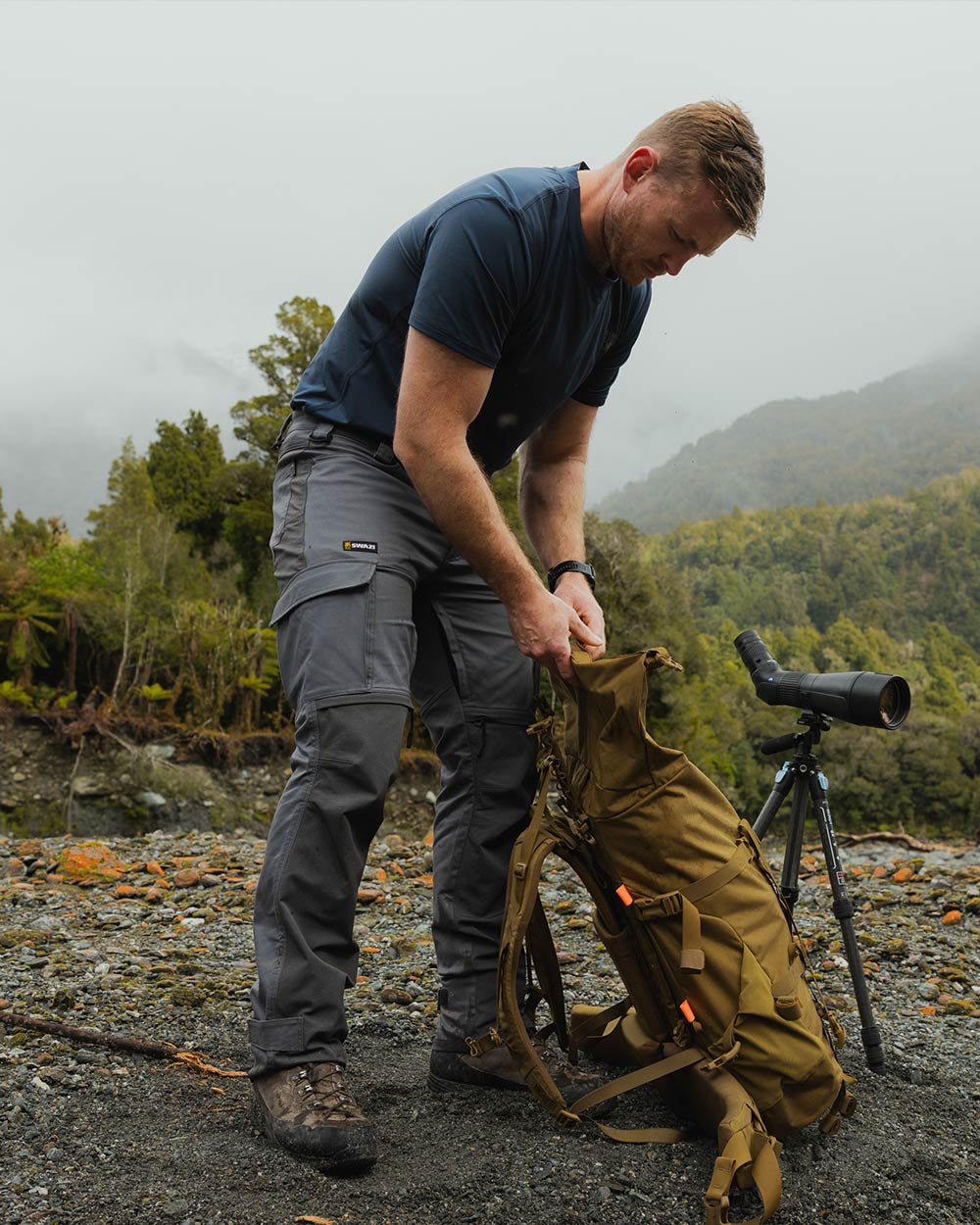
We don’t make gear for show. We make it to keep you warm, dry and comfortable, whatever the day throws at you. Tough enough for scrub and scree. Comfortable enough to wear from first light till dark. Pockets and zips right where you need them. Built to last season after season. We develop our own fabrics, and every piece is tested rigorously before it hits the shelf.
TESTING
In the factory
Before anything goes near a hill, it gets put through its paces with the latest testing technology. We test waterproofing, seams, wind resistance, abrasion, and how it holds up wash after wash. Every fabric has to prove it’s built for the job it’s meant to do.
02 / 02
In the field
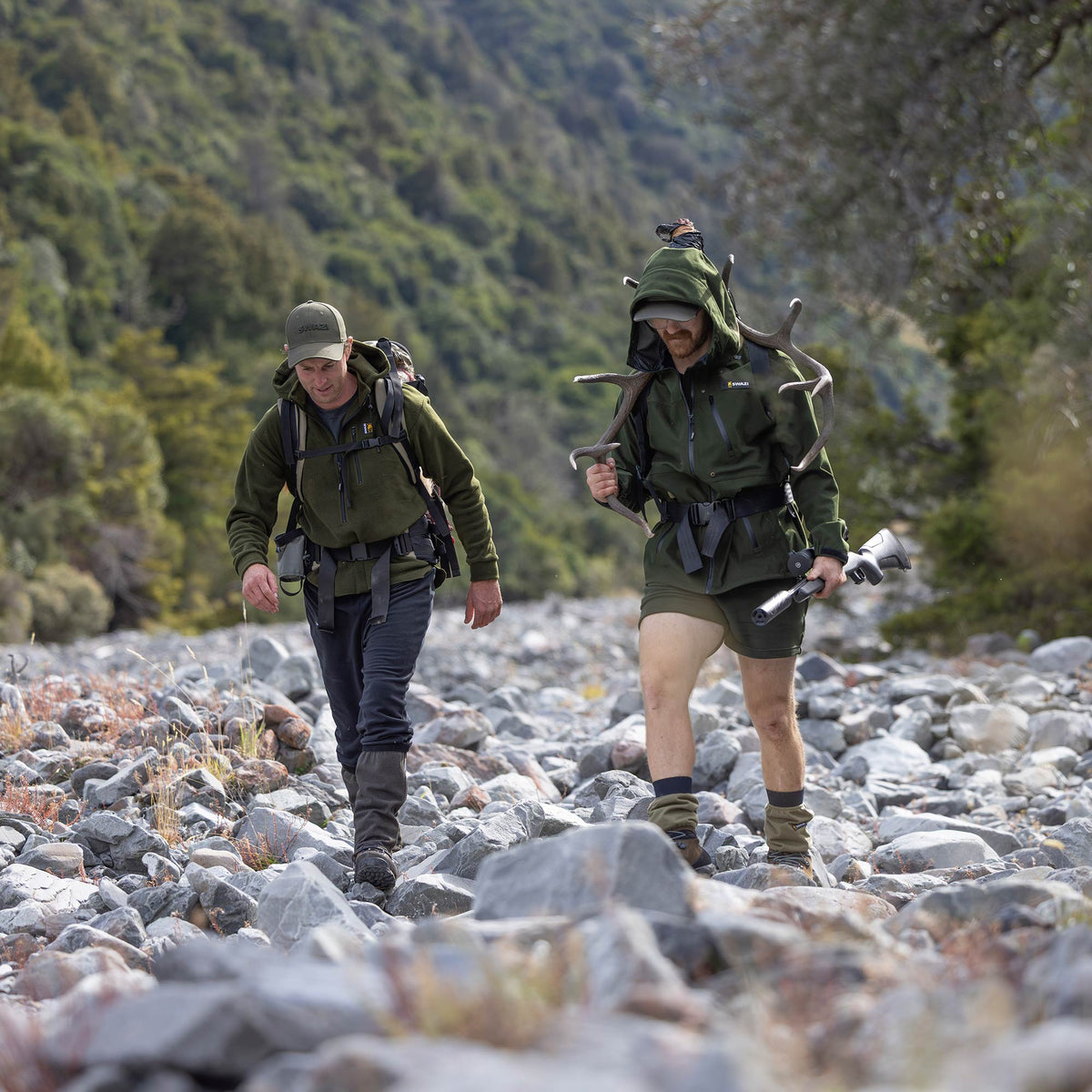
Then it goes bush, from the Tararuas and Ruahines on our doorstep to the West Coast and the Southern Alps. Our own crew, plenty of them hunters, plus testers overseas, wear it hard in proper weather. If it doesn’t hold up, it doesn’t go on sale
What we stand for
The best outdoor gear we can make. Built to perform when it counts, and to last for decades.
From day one it was built for hunters, farmers and possum trappers. People who work hard for their money and expect their gear to hold up when they’re in the thick of it.
We’re family-owned and run, and we do things the way Swazi always has. Straight up, no shortcuts, and we back what we make.
Right, that’s enough reading. Get out there, wear it hard, and bring it back in 20 years to tell us about it.